



My blog has moved over to the Bloguin network, come visit me over there at
Sunday, March 1, 2015

Monday, February 16, 2015
SPONSORED: Who Should the Steelers Draft?
Pittsburgh’s Wild Card Playoff Round loss to the Baltimore Ravens left a bad taste in the mouths of Steelers fans everywhere. However, although it doesn’t feel like it right now, the 2015 season is going to be here closer than you think. And when it comes, ScoreBig.com will be the place to save on every Steelers ticket, for every game. Until then, the one thing every fan can look forward to is the upcoming NFL Draft.
Almost everybody agrees that the Steelers need to use their first pick to shore up a leaky secondary. Their offense is one of the most elite in the league, but having Roethlisberger, Brown, and Bell can only do you so much if you’re letting the other team pick you apart in the passing game. Pittsburgh finished a ghastly 27th in passing yard defense last season.
Here are three players Pittsburgh should consider taking with their first pick:
1. Gerrod Holliman, Free Safety, Louisville
This Cardinals FS babied opposing quarterbacks in 2014, tying a 46-year-old FBS record by picking off 14 passes. That’s an average of more than 1 interception a game. However, while Holliman’s ball-hawking skills are unparalleled, he struggles making open field tackles and reading opposing offenses against the run. He’s super talented, but would be a project on the next level, at least as a rookie.
2. Kevin Johnson, Cornerback, Wake Forest
This Demon Deacon doesn’t create turnovers at as an astonishing clip as Holliman can, but he’s got good length and is serviceable in coverage. He’s also much stronger when it comes to preventing the run and banging bodies. At the risk of being too simplistic, consider Johnson the inverse of Holliman. He probably doesn’t have as high a ceiling as the Louisville safety over a whole career, but he can come in on day one more NFL-ready.
3. PJ Williams, Florida State
Williams is a freak athlete who can play both corner and safety. He’s 6’1 so he can match up against bigger, physical receivers, but at a lithe 190 pounds he can also move and keep with quicker slot guys. The old ‘character concerns’ red flag surrounds Williams, however; he was involved in a hit and run while at FSU (though the Tallahassee police department, ever-lenient with Seminoles players, downgraded it to a mere traffic ticket). Is he mature enough to stay focused on what it takes to succeed in the pros?
ScoreBig.com is the place to get all your Pittsburgh Steelers tickets in 2015. And while you wait through the long winter and spring for the new season to arrive, check out whatever NHL, NBA, or MLB tickets spur your interest as well! ScoreBig.com is the only place where you’ll save on every ticket, every sport, every day.
Saturday, February 14, 2015
SPONSORED: Who Was The Steelers MVP?
You don’t come in first place in your division and win 11 games in the competitive AFC without a team effort. As such, it would be unfair for anybody to list just one Steelers player as the team’s season MVP. However, here are three players who truly played above and beyond in 2014.
3. I could say that quarterback Ben Roethlisberger had a fantastic season under center in 2014, but that would be rather akin to saying water is wet, isn’t it? Big Ben has been so good for so long (he does have three Super Bowl appearances and two rings, after all) that it’s easy to take his excellence for granted. This year though was something else, even by his solid standards. Career highs in completion percentage, touchdowns, passing yards, and a career low in interceptions (over a 16 game season). Wow.
2. Running back LeVeon Bell took a major leap forward in his sophomore season, upping per carry average by 1.2 yards and rushing for 1300+ yards overall. He had a touchdown-to-fumble ratio of 8-0. That’s right, zero fumbles in sixteen games, an incredibly valuable trait for any running back. He was such a revelation that the Pro Football Writers of America voted him the Most Improved Player of the Year. Unfortunately, through no fault of Bell’s own, his fantastic season was marred by a Week 17 injury that forced him to sit out the Steelers’ playoff loss to Baltimore. Had he been at full strength for that game is a major “What If” that Steelers fans with have to grapple with all off-season.
1. Great as Roethlisberger and Bell were, the closest thing to an MVP that Pittsburgh had all year was wide receiver Antonio Brown. In a league that is passing the ball with great frequency than ever, Brown was the best at his position all year. A league leading 1698 yards receiving. 13 TDs. He’s the best weapon Big Ben has had since he was chucking it to Hines Ward and Plaxico Burress almost a decade ago, and when all’s said and done he’ll probably have a better career than both. In fact, he was so good this year that he wasn’t just named to the Pro Bowl – he was named the AFC’s captain. In a year in which a lot of Steelers were very good, Brown wasn’t very good. He was borderline transcendent.
ScoreBig.com is the place to get all your Pittsburgh Steelers tickets in 2015. And while you wait through the long winter and spring for the new season to arrive, check out whatever NHL, NBA, or MLB tickets spur your interest as well! ScoreBig.com is the only place where you’ll save on every ticket, every sport, every day.
3. I could say that quarterback Ben Roethlisberger had a fantastic season under center in 2014, but that would be rather akin to saying water is wet, isn’t it? Big Ben has been so good for so long (he does have three Super Bowl appearances and two rings, after all) that it’s easy to take his excellence for granted. This year though was something else, even by his solid standards. Career highs in completion percentage, touchdowns, passing yards, and a career low in interceptions (over a 16 game season). Wow.
2. Running back LeVeon Bell took a major leap forward in his sophomore season, upping per carry average by 1.2 yards and rushing for 1300+ yards overall. He had a touchdown-to-fumble ratio of 8-0. That’s right, zero fumbles in sixteen games, an incredibly valuable trait for any running back. He was such a revelation that the Pro Football Writers of America voted him the Most Improved Player of the Year. Unfortunately, through no fault of Bell’s own, his fantastic season was marred by a Week 17 injury that forced him to sit out the Steelers’ playoff loss to Baltimore. Had he been at full strength for that game is a major “What If” that Steelers fans with have to grapple with all off-season.
1. Great as Roethlisberger and Bell were, the closest thing to an MVP that Pittsburgh had all year was wide receiver Antonio Brown. In a league that is passing the ball with great frequency than ever, Brown was the best at his position all year. A league leading 1698 yards receiving. 13 TDs. He’s the best weapon Big Ben has had since he was chucking it to Hines Ward and Plaxico Burress almost a decade ago, and when all’s said and done he’ll probably have a better career than both. In fact, he was so good this year that he wasn’t just named to the Pro Bowl – he was named the AFC’s captain. In a year in which a lot of Steelers were very good, Brown wasn’t very good. He was borderline transcendent.
ScoreBig.com is the place to get all your Pittsburgh Steelers tickets in 2015. And while you wait through the long winter and spring for the new season to arrive, check out whatever NHL, NBA, or MLB tickets spur your interest as well! ScoreBig.com is the only place where you’ll save on every ticket, every sport, every day.
Thursday, February 12, 2015
SPONSORED: Lessons To Take Away From Steelers Season
Whether you saw the Pittsburgh Steelers live from Heinz Field thanks to ScoreBig.com, or if you just watched them play from the comfort of your couch, there was a lot to appreciate about their 2014 season. An 11-5 record, a top spot in the ultra-competitive AFC North, and career years from multiple offensive players. Still, that 30-17 opening round playoff loss to archrival Baltimore stings. Taking the good with the bittersweet, here are some Lessons to take away from the season.
1. Antonio Brown has given Roethlisberger’s career new life
Roethlisberger has never had a bad season, and with two Super Bowl rings he’s a pretty clear-cut Hall of Famer already. But, for a few seasons, it seemed like Big Ben had slipped out of the top tier of NFL QBs. He was still very good, just not as elite as he once was. That changed in a great way in 2014. Thanks to a breakout season from wide receiver Antonio Brown, Roethlisberger had the best season of his career at 32. In his first ten seasons he had only broken the 4000-yard mark thrice and the 30-TD mark once. He finished 2014 with nearly 5000 yards and 32 scores.
2. LeVeon Bell is a keeper
Bell had an okay season in his rookie year, but one that didn’t quite live up to the hope considering the Steelers’ then-weakness at the position and Bell’s high draft status. He had a breakout year in 2014, topping the 1000 yard mark and winning Most Improved Player of the Year in 2014.
3. Every game matters. Every game.
The Steelers went 11-5 and won the AFC North, so at first glance it’s hard to be disappointed in that record. But you maybe should be. Two of Pittsburgh’s losses came to the 4-12 Jets and 2-14 Buccaneers. If they take care of business in those eminently winnable contests, they’re 13-3 and have a first round bye and home field advantage throughout the AFC playoffs. If they have that bye LeVeon Bell probably plays for them in the Divisional Round. The AFC is too competitive to expect to win 3 games (two on the road) in order to make the Super Bowl, as their 30-17 loss to Baltimore proved.
The first round elimination hurts, but every new year brings a new season. And when the months pass by and football’s back at Heinz Field ScoreBig.com is the place where you’ll save on every Steelers ticket, everyday. And in the meantime, check out their amazing selection of cheap NBA, NHL, or MLB tickets, too!
Monday, January 12, 2015
Blow It All Up? The Steelers 2015 Salary Cap Situation
One of the common refrains that Steelers fans have echoed over the radio and internet is that the team simply isn't good enough and they should "blow it all up and start over." But in the salary cap era, is this a feasible suggestion? The Steelers are already carrying the most dead money on their 2015 Salary Cap of any team in the league - due in large part to cutting LaMarr Woodley this year. The Steelers got a huge break in 2014 when the salary cap was set at $133 million, which was $8 to $10 million higher than many projected. Projections for 2015 have set the salary cap in the $140 million range. If the cap increases more than that, it is simply additional spending the Steelers could utilize.
The Steelers did ink several large multi-year contracts this past off-season, but given the way their contracts are structured, the Steelers could actually save money against the salary cap by jettisoning some of these players. But the question is: should they do it? At some point, your salary cap can't be filled with dead money from players that aren't with the team. Some money has to be spent on players that will replace them and will actually see the field. The danger here is winding up like the Oakland Raiders or Washington Redskins. If the Steelers cut ties with too many players and incur too much dead money, they could have a minimal amount of room to spend on players that will actually play and be forced to stack their roster with late round draft picks and undrafted free agents.
For those not as familiar with the intricacies of the NFL Salary Cap, here's a quick refresher. When a player signs a contract their signing bonus is pro-rated over the life of the contract for cap purposes (so a $10 million signing bonus on a 5-year contract counts $2 million per year) even though the player receives that money up front. A player's salary cap number is their base salary for that year plus the pro-rated amount of their signing bonus. If a player is cut, the "dead money" against the cap is the remaining guaranteed money in the contract (primarily the remaining amount of pro-rated signing bonus money).
The team's total cap number is the summation of the cap numbers from their players under contract (including those on IR) and dead money from players cut that year. In the offseason, the "Rule of 51" applies where only the 51 highest salaries count towards the total cap number.
Currently, the Steelers are projected to have a total cap number of approximately $136 million in 2015, which includes the $9.4 million in dead money they are carrying forward from players cut this year.
The Steelers front office has been rightly criticized for some of their free agent signings in 2014, primarily because of their poor play. These criticisms are totally justified, but let's also give credit where credit is due. The Steelers did an excellent job in structuring the contracts of their free agent signees so that they could cut ties with these players if they didn't perform with minimal dead money hanging on the Cap. This has already come into play when the Steelers cut LeGarrette Blount with the consequence of only $475,000 in dead money against the 2015 Cap, which actually saved the team about $2 million in base salary.
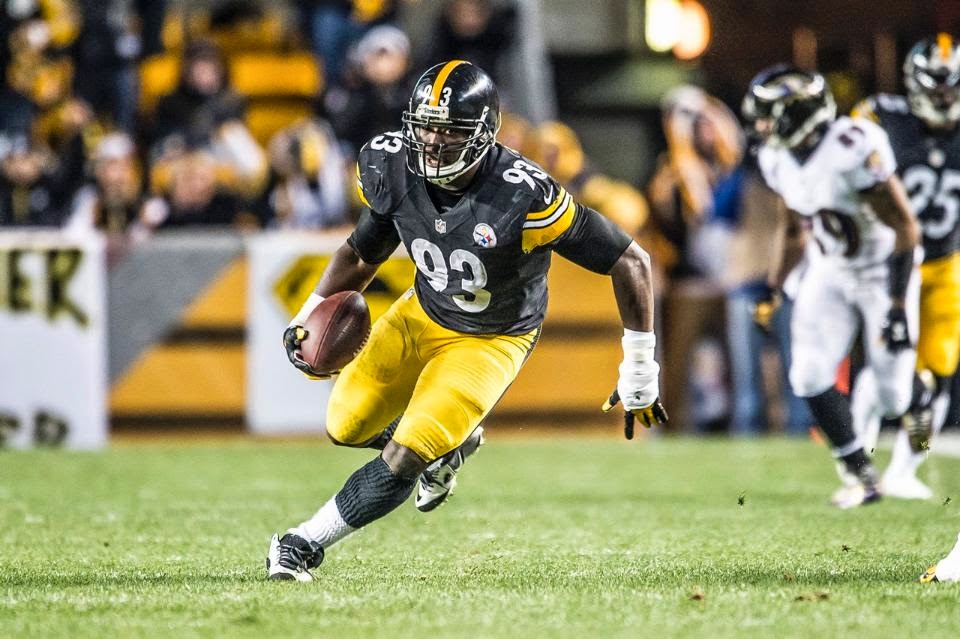
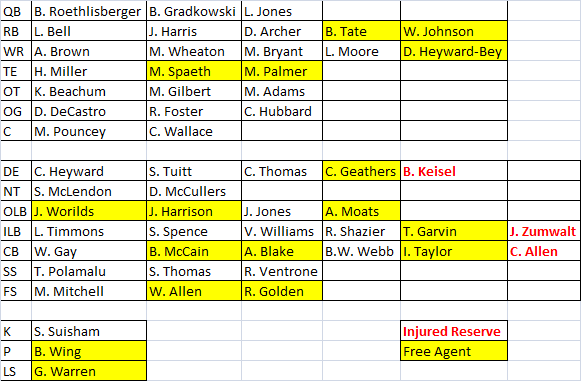
There are 19 players currently on the Steelers roster whose contracts will expire at the end of this year. The headliners of the list are Jason Worilds, Ike Taylor, James Harrison, Will Allen, Matt Spaeth, Brice McCain, Antwon Blake and Arthur Moats. Currently, none of these players count towards the 2015 salary cap. The biggest and most immediate decision the Steelers will have to make is what to do with Jason Worilds. Worilds played in 2014 under a "transition" tag which paid him $9.5 million. The Steelers could use the Franchise Tag on Worilds which would keep him on the roster for another year at about $10 million, which might be more than the Steelers can afford under their current cap situation. The Steelers could try to work out a long-term deal for Worilds, but he would have most of the power in negotiations as the Steelers are strapped at Outside Linebacker without Worilds. Given his age and production, he is likely to get a contract in the range of 4-6 years for $6-$8 million per year on average.
Additionally, there are 13 players whose contracts expire after the 2015 season. The Steelers typically look to extend these players with a year remaining on their current deal in order to try to stretch out the signing bonus over more years. Ben Roethlisberger, Cam Heyward, David DeCastro and Kelvin Beachum are the biggest names on the list. The Steelers may look to extend at least one, if not all four of them in the 2015 offseason. Since DeCastro was a first round pick, the Steelers will have a "team option" to extend his contract by a year like they did with Heyward this year. Steve McLendon, Ramon Foster, William Gay, Bruce Gradkowski, Mike Adams and Sean Spence are also entering the last year of their contract in 2015, but it's hard to see the Steelers making an aggressive move to re-sign any of them this offseason.
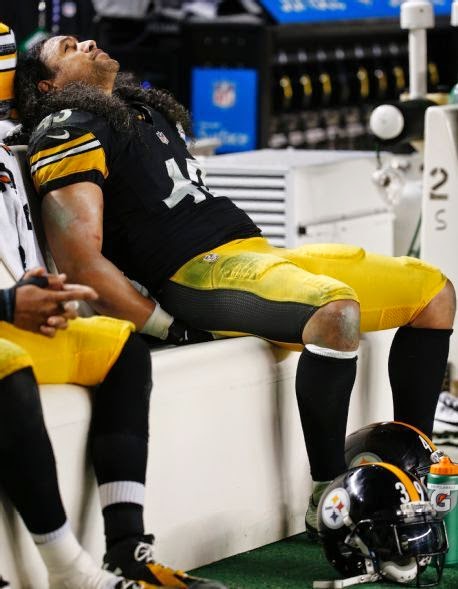
This one will be the hardest one to swallow for Steelers fans. The ideal scenario would be that Troy Polamalu would be allowed to retire and not put through the same situation James Harrison was when the Steelers terminated his contract. However, Polamalu has only been a shade of his former self on the field and currently has the 4th highest 2015 cap number. There is a significant amount of dead money incurred if Troy is cut or retires, but there is nearly as much cap savings.
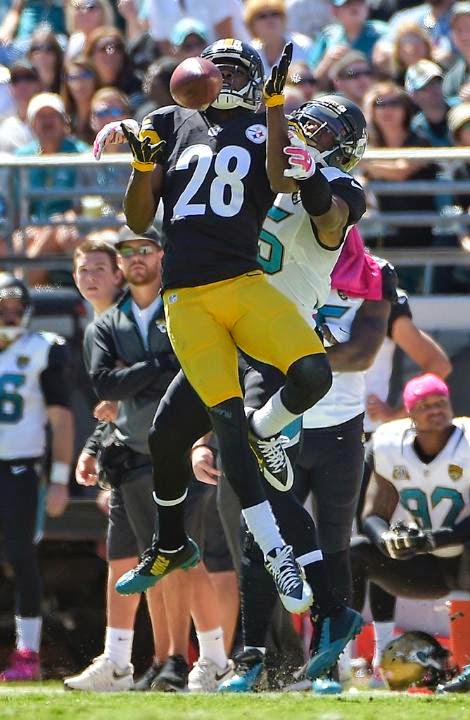
There isn't a lot of cap savings here, primarily because the Steelers just signed Allen to an extension before the 2014 season. Allen responded by having the worst year of his career and was benched in favor of Brice McCain and Antwon Blake. One factor in play here is that Allen is due a $3 million roster bonus in April, which the Steelers would not have to pay him if he is cut before then. Would the Steelers incur $5.5 million in dead money to save $3 million in the bank? The ball is primarily in Allen's court on this one. If the coaches believe he is a lost cause, he will likely be gone. If they believe he can work through his issues and be a productive player then he will still be on the team in 2015.
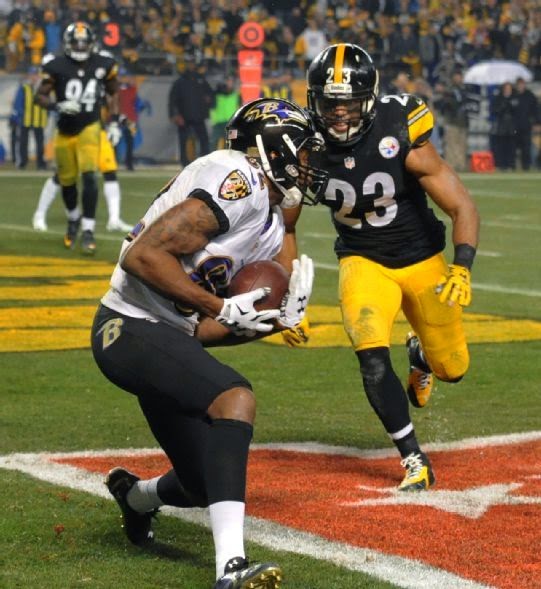
There isn't a ton of savings here, but to call Mitchell's play subpar would be a generous statement. Another factor in play is that Mitchell is due a $2 million roster bonus in April. If the Steelers cut him before April, they would save $2 million in the bank and jettison one of their worst defensive players. Like with Cortez Allen, the big question will be whether or not the Steelers think they can get a replacement-level player for the savings they can get from cutting Mitchell. Unfortunately, I have a feeling Mitchell will be given another year to prove himself.
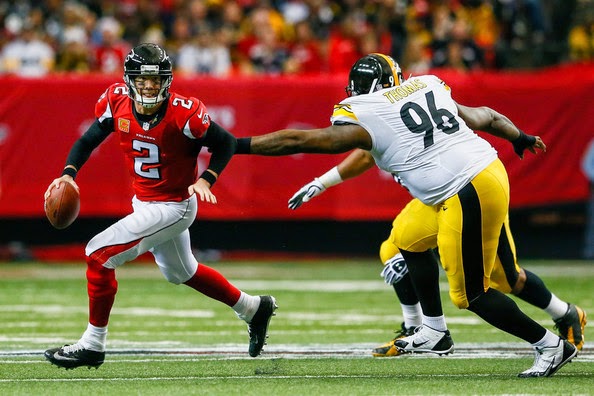
Looking at the numbers, Cam Thomas is as good as gone. Looking at his play on the field, he is most definitely gone. Thomas has been the Steelers worst defensive lineman and has yet to make a productive impact on this team. Until Brett Keisel got hurt, he continued to get playing time ahead of rookie Stephon Tuitt, much to the chagrin of many Steelers fans and media members. After Keisel's injury, Tuitt stepped in and excelled which should make cutting Thomas an easy decision.
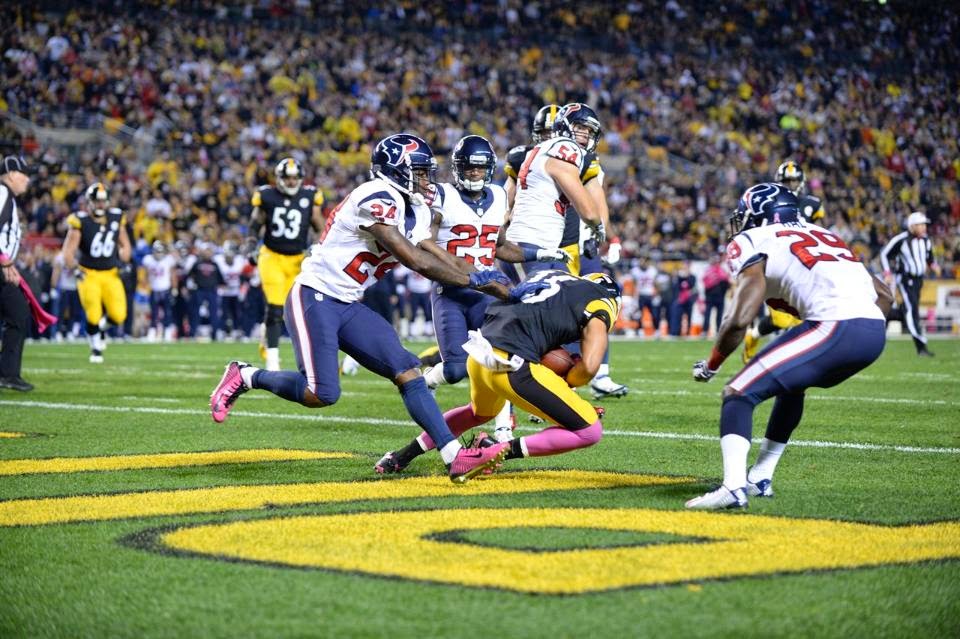
The Steelers brought in Moore to be a possession receiver out of the slot. He has not performed up to expectations and was surpassed on the depth chart by Martavis Bryant. It is hard to see the Steelers keeping Moore around for the second year of his deal, especially when they can save $1.5 million by letting him go.
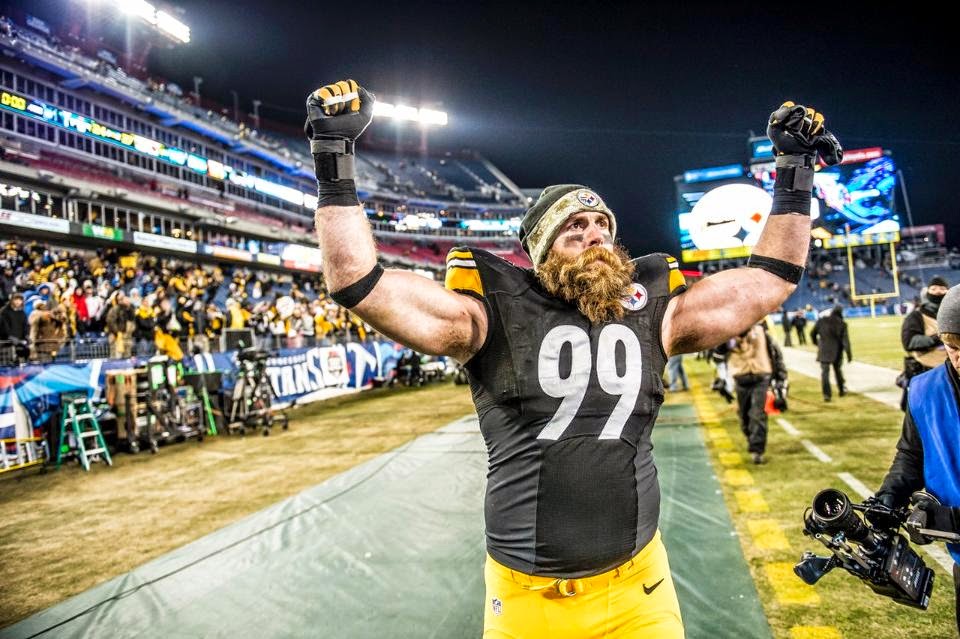
Like with Troy, letting Keisel go will not be an easy thing to do. If he is able to recover from his triceps injury, this is a very reasonable price for a depth defensive lineman. However, it is hard to say if Keisel will opt to retire or try to stick it out for one more season. Keisel will be 37 years old next year so it is hard to say if he will have anything left in the tank.
Antonio Brown, Maurkice Pouncey, Marcus Gilbert, Cam Heyward, David DeCastro, Jarvis Jones, Ryan Shazier, Le'Veon Bell, Stephon Tuitt.
Looking purely from a salary cap perspective, these are the players the Steelers simply can't afford to cut. While Jarvis Jones has not been very productive in his second year due to a broken wrist, the Steelers would actually lose money against the cap if they were to let him go. So like it or not, Jones will be a Steeler in 2015. The only other name on this list that might come as a bit of a surprise would be Marcus Gilbert. Gilbert was just signed to a contract extension in the 2014 offseason and like Jones, it would cost the Steelers more to cut him than it would cost to keep him on the roster.

The Steelers did ink several large multi-year contracts this past off-season, but given the way their contracts are structured, the Steelers could actually save money against the salary cap by jettisoning some of these players. But the question is: should they do it? At some point, your salary cap can't be filled with dead money from players that aren't with the team. Some money has to be spent on players that will replace them and will actually see the field. The danger here is winding up like the Oakland Raiders or Washington Redskins. If the Steelers cut ties with too many players and incur too much dead money, they could have a minimal amount of room to spend on players that will actually play and be forced to stack their roster with late round draft picks and undrafted free agents.
For those not as familiar with the intricacies of the NFL Salary Cap, here's a quick refresher. When a player signs a contract their signing bonus is pro-rated over the life of the contract for cap purposes (so a $10 million signing bonus on a 5-year contract counts $2 million per year) even though the player receives that money up front. A player's salary cap number is their base salary for that year plus the pro-rated amount of their signing bonus. If a player is cut, the "dead money" against the cap is the remaining guaranteed money in the contract (primarily the remaining amount of pro-rated signing bonus money).
The team's total cap number is the summation of the cap numbers from their players under contract (including those on IR) and dead money from players cut that year. In the offseason, the "Rule of 51" applies where only the 51 highest salaries count towards the total cap number.
Currently, the Steelers are projected to have a total cap number of approximately $136 million in 2015, which includes the $9.4 million in dead money they are carrying forward from players cut this year.
The Steelers front office has been rightly criticized for some of their free agent signings in 2014, primarily because of their poor play. These criticisms are totally justified, but let's also give credit where credit is due. The Steelers did an excellent job in structuring the contracts of their free agent signees so that they could cut ties with these players if they didn't perform with minimal dead money hanging on the Cap. This has already come into play when the Steelers cut LeGarrette Blount with the consequence of only $475,000 in dead money against the 2015 Cap, which actually saved the team about $2 million in base salary.
Free Agents
There are 19 players currently on the Steelers roster whose contracts will expire at the end of this year. The headliners of the list are Jason Worilds, Ike Taylor, James Harrison, Will Allen, Matt Spaeth, Brice McCain, Antwon Blake and Arthur Moats. Currently, none of these players count towards the 2015 salary cap. The biggest and most immediate decision the Steelers will have to make is what to do with Jason Worilds. Worilds played in 2014 under a "transition" tag which paid him $9.5 million. The Steelers could use the Franchise Tag on Worilds which would keep him on the roster for another year at about $10 million, which might be more than the Steelers can afford under their current cap situation. The Steelers could try to work out a long-term deal for Worilds, but he would have most of the power in negotiations as the Steelers are strapped at Outside Linebacker without Worilds. Given his age and production, he is likely to get a contract in the range of 4-6 years for $6-$8 million per year on average.
Additionally, there are 13 players whose contracts expire after the 2015 season. The Steelers typically look to extend these players with a year remaining on their current deal in order to try to stretch out the signing bonus over more years. Ben Roethlisberger, Cam Heyward, David DeCastro and Kelvin Beachum are the biggest names on the list. The Steelers may look to extend at least one, if not all four of them in the 2015 offseason. Since DeCastro was a first round pick, the Steelers will have a "team option" to extend his contract by a year like they did with Heyward this year. Steve McLendon, Ramon Foster, William Gay, Bruce Gradkowski, Mike Adams and Sean Spence are also entering the last year of their contract in 2015, but it's hard to see the Steelers making an aggressive move to re-sign any of them this offseason.
Potential Cap Savings
Troy Polamalu
2015 Cap Number: $8,250,000
Dead Money if Cut: $4,500,000
Cap Savings if Cut: $3,750,000
This one will be the hardest one to swallow for Steelers fans. The ideal scenario would be that Troy Polamalu would be allowed to retire and not put through the same situation James Harrison was when the Steelers terminated his contract. However, Polamalu has only been a shade of his former self on the field and currently has the 4th highest 2015 cap number. There is a significant amount of dead money incurred if Troy is cut or retires, but there is nearly as much cap savings.
Cortez Allen
2015 Cap Number: $6,981,000
Dead Money if Cut: $5,400,000
Cap Savings if Cut: $1,581,000
There isn't a lot of cap savings here, primarily because the Steelers just signed Allen to an extension before the 2014 season. Allen responded by having the worst year of his career and was benched in favor of Brice McCain and Antwon Blake. One factor in play here is that Allen is due a $3 million roster bonus in April, which the Steelers would not have to pay him if he is cut before then. Would the Steelers incur $5.5 million in dead money to save $3 million in the bank? The ball is primarily in Allen's court on this one. If the coaches believe he is a lost cause, he will likely be gone. If they believe he can work through his issues and be a productive player then he will still be on the team in 2015.
Mike Mitchell
2015 Cap Number: $4,950,000
Dead Money if Cut: $3,800,000
Cap Savings if Cut: $1,150,000
There isn't a ton of savings here, but to call Mitchell's play subpar would be a generous statement. Another factor in play is that Mitchell is due a $2 million roster bonus in April. If the Steelers cut him before April, they would save $2 million in the bank and jettison one of their worst defensive players. Like with Cortez Allen, the big question will be whether or not the Steelers think they can get a replacement-level player for the savings they can get from cutting Mitchell. Unfortunately, I have a feeling Mitchell will be given another year to prove himself.
Cam Thomas
2015 Cap Number: $2,500,000
Dead Money if Cut: $500,000
Cap Savings if Cut: $2,000,000
Looking at the numbers, Cam Thomas is as good as gone. Looking at his play on the field, he is most definitely gone. Thomas has been the Steelers worst defensive lineman and has yet to make a productive impact on this team. Until Brett Keisel got hurt, he continued to get playing time ahead of rookie Stephon Tuitt, much to the chagrin of many Steelers fans and media members. After Keisel's injury, Tuitt stepped in and excelled which should make cutting Thomas an easy decision.
Lance Moore
2015 Cap Number: $1,822,500
Dead Money if Cut: $322,500
Cap Savings if Cut: $1,500,000
The Steelers brought in Moore to be a possession receiver out of the slot. He has not performed up to expectations and was surpassed on the depth chart by Martavis Bryant. It is hard to see the Steelers keeping Moore around for the second year of his deal, especially when they can save $1.5 million by letting him go.
Brett Keisel
2015 Cap Number: $1,750,000
Dead Money if Cut: $250,000
Cap Savings if Cut: $1,500,000
Like with Troy, letting Keisel go will not be an easy thing to do. If he is able to recover from his triceps injury, this is a very reasonable price for a depth defensive lineman. However, it is hard to say if Keisel will opt to retire or try to stick it out for one more season. Keisel will be 37 years old next year so it is hard to say if he will have anything left in the tank.
Not Going Anywhere
Antonio Brown, Maurkice Pouncey, Marcus Gilbert, Cam Heyward, David DeCastro, Jarvis Jones, Ryan Shazier, Le'Veon Bell, Stephon Tuitt.
Looking purely from a salary cap perspective, these are the players the Steelers simply can't afford to cut. While Jarvis Jones has not been very productive in his second year due to a broken wrist, the Steelers would actually lose money against the cap if they were to let him go. So like it or not, Jones will be a Steeler in 2015. The only other name on this list that might come as a bit of a surprise would be Marcus Gilbert. Gilbert was just signed to a contract extension in the 2014 offseason and like Jones, it would cost the Steelers more to cut him than it would cost to keep him on the roster.
Where Do We Go From Here?
Once again, the Steelers will be in a tight salary cap situation in 2015 unless the cap increases above current estimates. The Steelers $136 million in projected cap spending comes from just 39 active player contracts (including the 6 players profiled in the "Cap Savings" category). The Steelers have not traded away any of their 2015 draft picks and will likely get 1 or 2 compensatory picks. Nevertheless, the Steelers still have to come up with a 53-man roster to put on the field in 2015 that fits under the salary cap. Based on the projections from Over The Cap, the Steelers currently have about $4.7 million in cap space. If Troy Polamalu and Brett Keisel retire, this number increases to $10 million and could increase to $13.5 million if Cam Thomas and Lance Moore are cut. The Steelers could also generate additional 2015 cap space by signing Ben Roethlisberger to a contract extension (which seems very likely). Cam Heyward, with a cap hit of $6.9 million is a possibility for an extension but it's likely his cap hit would not be changed much with an extension. An extension for Kelvin Beachum is unlikely before training camp because his rookie contract has such a small cap hit ($671,474) that any extension would increase his cap number. The Steelers probably won't make any move there until after the draft when they know how much cap space they have available.
Looking further down the road, the Steelers second largest cap hit is that of Lawrence Timmons, but his contract expires after 2016 so it would be very difficult to restructure his contract, lest the Steelers put themselves in a bad cap situation next year as well. Rather than restructure, the Steelers could look to extend Timmons, which could spread some of his base salary money out over the next 4 or 5 years.
(click to enlarge, via Over The Cap)
The Steelers top 10 contracts in 2015 account for 65% of their total cap spending. As already discussed, Ben Roethlisberger will likely receive a contract extension that will lessen his 2015 cap hit. Cam Heyward is an extension possibility but the impact on his cap hit will likely be minimal based on the amount of guaranteed money other 3-4 DEs have received recently. Lawrence Timmons and Antonio Brown are not candidates for restructure based on the amount of money and years left in their contracts. Maurkice Pouncey and Marcus Gilbert are untouchable based on the limited cap savings their release would generate. Troy Polamalu's play suffered a sharp decline so he will probably not be part of the 2015 Steelers. This leaves a key decision on two players: Cortez Allen and Mike Mitchell. Both players were given long-term deals before the 2014 season are were expected to be cornerstones of the secondary moving forward. As I already discussed, cutting either player would incur a significant amount of dead money against the cap, and the Steelers might not be able to sign a replacement player for the amount of cap money saved.
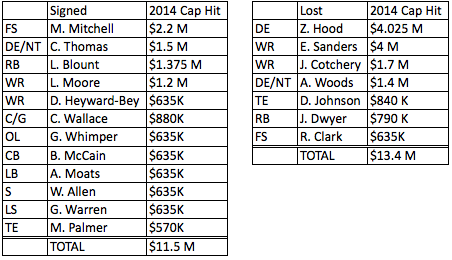
If Mitchell and Allen are retained while the other 4 (Polamalu, Keisel, Thomas and Moore) retire or are released, the Steelers will have 35 players under contract with about $13 million in cap space left to fill out the rest of the roster. Looking back to the 2014 offseason, the Steelers were able to sign 12 players and only spend about $11.5 million against the 2014 cap. Granted, 8 of the 12 players were signed to veteran minimum contracts. The Steelers will be able to be active on the free agent market but they will probably not be contenders for any of the top-tier free agents. Rather, they will have to fill the holes in their lineup with relatively cheap options.
2014 Free Agency Summary
In conclusion, "blowing it all up" sounds good in theory, but in the salary cap NFL it's not likely a viable option for the Steelers. The core players of the 2015 Steelers will likely be mostly the same as the core players of 2014. On offense, this means Ben Roethlisberger, Le'Veon Bell, Antonio Brown, Markus Wheaton, Martavis Bryant, Heath Miller, Kelvin Beachum, Marcus Gilbert, David DeCastro and Maurkice Pouncey. Ramon Foster, the 11th starter on offense, has one year left on his contract at a reasonable price. On defense, there is a bit more leeway for roster decisions. Cam Heyward and Stephon Tuitt will both return on the defensive line.Steve McLendon only has one year remaining and backup nose tackle Daniel McCullers will be with the team at least through training camp. As I already detailed, Jarvis Jones, Lawrence Timmons, Sean Spence, Vince Williams and Ryan Shazier aren't going anywhere (unless the Steelers try to trade one of their inside linebackers during the draft). In the secondary, the team will have to decide on the risk-reward of keeping Cortez Allen and Mike Mitchell, but there is an obvious hole at corner. William Gay only has 1 year remaining and the only other corner currently on the roster is free agent acquisition B.W. Webb who barely played this year. Shamarko Thomas would be the presumed replacement for Troy Polamalu and Ross Ventrone was our best special teams player in 2014 which likely keeps him on the roster through training camp.
While the Steelers can't "blow it all up" and get rid of everyone because of the salary cap, they are looking at a roster turnover of 15-20 players (28% to 38%). About half of these players will be replaced by rookies and the Steelers should have enough money to be active on the free agent market, though they won't have the funds to be able to make a huge splash like signing Justin Houston or Ndamukong Suh. That said, there are quality players out there the Steelers could sign to improve their roster, but they will once again be working within the confines of limited cap space.
Friday, January 9, 2015
Requiem for a Season: The 2014 Pittsburgh Steelers
In the end, sometimes the best place to start is thinking about the beginning. The story of the 2014 Pittsburgh Steelers began with a missed field goal in San Diego last December, an improbable end to a 2013 season that saw us start 0-4 then rally to a 6-2 finish and nearly steal a playoff berth. But when the Chargers emerged victorious in overtime, the book was closed on the 2013 Steelers and the story of 2014 began. The offseason started with debates over LaMarr Woodley vs Jason Worilds, which position on defense was of the biggest need in the draft, and which players would need to be cut in order to stay under the salary cap. The Steelers got lucky in early 2014 when the NFL announced the salary cap at $133 million, a $10 million increase from 2013 and much higher than many had anticipated. This enabled the Steelers to put the Transition Tag on Jason Worilds and cut ties with LaMarr Woodley. Woodley was designated as a June 1 cut in order to save some money on the 2014 cap, pushing $8.5 million in dead money out to 2015 - something that I'll be talking about a lot more when I start breaking down our salary cap situation next week.
Free agency saw the departure of Ziggy Hood, Emmanuel Sanders, Jerricho Cotchery, Larry Foote, Al Woods and Ryan Clark. Those guys cashed in to the tune of $13.4 million in 2014 cap dollars. On the flip side, the Steelers went out and attempted to get the most bang for their buck, signing 8 players to veteran minimum contracts (Palmer, Warren, Allen, Moats, McCain, Whimper, Wallace and Heyward-Bey). They also made 4 bigger signings of Mike Mitchell, Cam Thomas, LeGarrette Blount and Lance Moore.


In his first game with a helmet, the 4th round pick hauled in 2 catches for 40 yards and a touchdown against Houston. Suddenly the offense had its deep threat. Bryant exploded over the next two weeks against Indianapolis and Baltimore, scoring twice in each game and tallying 127 receiving yards. After Bryant was inserted into the lineup in Week 7, the team averaged 31.2 points per game - a 10-point improvement over their first 6 outings. For the defense, it was more of the same as they allowed 22.9 points per game over the last 10 but improved their turnover margin from 1 takeaway per game in the first 6 games to 1.5 per game in the last 10. All this combined to produce an 8-2 run to close out the season and take the division title in the last week of the season from the Bengals. Takeaways proved to be an indicator for success as the Steelers were 7-0 in games where the defense produced at least 2 takeaways, were 7-0 in games they won the turnover battle, and were 10-2 in games where the turnover margin was even or favored the Steelers.

We have yet to know how the 2014 Steelers will be remembered by history. Will they be seen like one of the years of the mid-1980s: the last hurrah of Super Bowl Champions? (In this case James Harrison, Brett Keisel, Troy Polamalu and Ike Taylor). Or will it be seen as the year the turnaround began, much like 2007, emerging from an 8-8 campaign with an injection of young talent and the stepping stone to bigger and better things? These are the questions that will be in our minds during the offseason - as hopefully the 2015 campaign shares a conclusion with the 2008 season. Ultimately, I think the 2014 Steelers are who we thought they were. They were an improvement over the previous iterations that finished the season with the top passer, top receiver and one of the top running backs in the league. At the beginning of the year, I said "Denver and New England are clearly the best teams in the AFC, but the third spot is wide open. The Steelers could very well be the 3rd best team in the AFC this year." While our postseason results did not bear this out, the team did go 11-5 (with a 5-1 record against playoff teams) and finish 3rd in the AFC. That is nothing to scoff at after back-to-back 8-8 seasons and puts us on an upward trajectory heading into 2015. In fact, looking back to the second half of 2013, the Steelers are 17-8 in their last 25 games.
But at the same time, they were not who we thought they would be. They had one of the weaker schedules in the NFL this year (granted no one expected the NFC South to be *that* bad) but they could not take advantage of the weaker opposition on the schedule. The NFC South went 3-12-1 against the AFC North with 2 of the wins coming against the Steelers. Before the season, many had the Steelers pegged as a 10-6 team, but no one expected losses to the 2-14 Buccaneers, 4-12 Jets and 7-9 Browns (not to mention near-losses to the 3-13 Jaguars and 2-14 Titans). The one consistency of the Steelers was their inconsistency - they routinely played to the level of their opponents. They looked like an elite team against quality opponents like the Colts, Ravens and Bengals but looked like a team deserving of a Top-10 pick against the Bucs, Jags, Jets and Titans. At the end of the day in the NFL, the line between 10-6 and 6-10 is very thin.
Even though the book is now closed on the 2014 Steelers, let us not forget the good times. There certainly were many of them this year.
As an aside: For those that follow me on Twitter, you know that I commonly say "All Antonio Brown does is make big plays." I've tried to teach my 3-year old to say this, but every time I ask him "What does Antonio Brown do?" he says "Kicks people in the face!"
Free agency saw the departure of Ziggy Hood, Emmanuel Sanders, Jerricho Cotchery, Larry Foote, Al Woods and Ryan Clark. Those guys cashed in to the tune of $13.4 million in 2014 cap dollars. On the flip side, the Steelers went out and attempted to get the most bang for their buck, signing 8 players to veteran minimum contracts (Palmer, Warren, Allen, Moats, McCain, Whimper, Wallace and Heyward-Bey). They also made 4 bigger signings of Mike Mitchell, Cam Thomas, LeGarrette Blount and Lance Moore.
Looking back, the four big free agents that the Steelers signed were largely disappointments. However, they did get more than their money's worth out of Brice McCain and Greg Warren while Wallace, Moats and Allen provided solid rotational depth. Heyward-Bey gave nothing in the passing game but was arguably the third best special teams player (behind Ross Ventrone and Antwon Blake). The Steelers didn't get an impact player in free agency, and parted ways with Whimper in the preseason and Blount during the regular season. There was a lot of positivity about Mike Mitchell when the signing was first announced, including from myself:
Mitchell's contract is structured in a way that gives the Steelers a relatively easy out should he not pan out. Mitchell's contract has a $2 million roster bonus built in for 2015, which the Steelers could save if they cut him after this season (though it would likely take a disastrous 2014 for that to happen). Mitchell's base salary does not increase to $5 million until 2016, the third year of the deal, at which point the Steelers could cut him with less than $3 million dead against the cap. Mitchell had the best season of his career at the back end of Carolina's defense last year, finishing 4th on the team in tackles and had 4 interceptions and 10 passes defended.
The signs were all there that Mitchell could be an impact player. He had 4 picks, 10 passes defended, 2 sacks for Carolina in 2013. Unfortunately, his 2014 stat line was a regression to ineptitude where he had a career-low 3 passes defended and did not record an interception or sack for only the second time in his career. Mitchell's season was so bad, he wasn't even close to the ball or the receiver in most cases, routinely getting beat over the top and across the middle. He was atrocious in coverage and to make matters worse had a career high 5 penalties - 3 of them of the personal foul variety. Mitchell wound up being the kind of player that is almost impossible to root for - he was a dirty player on the field who talked a big game but never backed it up.
FYI, fans at the game thought DPI was going to be called, then realized Mitchell is an idiot.
— Chris (@ChrisG_BR) January 4, 2015
Unfortunately the two enduring images of Mitchell from this season will be the ridiculous leap into the Jets victory formation and screenshots of him chirping fans on Twitter.
@thesteelersnat pic.twitter.com/EnvaxHBHmc
— Mac (@macpsu03) November 18, 2014
For much of the season, the secondary was an unmitigated disaster and it was two cast-offs signed to minimum deals (McCain and Blake) that eventually stabilized the unit. The team started the year with Ike Taylor and Cortez Allen at corner and lost Taylor to injury and Allen to ineffective play, finishing the season with William Gay, McCain and Blake as the three primary corners. This is probably the most accurate description of our secondary through the first 6 games:

At the end of the season, Gay, McCain and Blake were clearly our best three corners but their size presented matchup problems for the Steelers as Gay was the tallest of the group at 5'10". Troy Polamalu's play significantly declined this year, which combined with the ineffective Mitchell created a gaping hole in the middle of the field. For the second time in three seasons, Polamalu missed playing time due to injury and this was the first season since 2007 that he failed to record an interception. Like Mitchell, Polamalu wasn't even close to the ball most of the time - recording a career low 1 pass defended. Troy frequently rushed off the edge but failed to record a sack for the first time in five years. In a dramatic change from previous seasons, it was the cornerbacks and not the safeties that were responsible for the splash plays from the Steelers defense.
And Cortez gets burned on the next play. Where is Mike Mitchell? #Steelers
— David Todd (@DavidMTodd) October 12, 2014
An unfortunately fair assessment of both Cortez Allen and Mike Mitchell
At the end of the season, Gay, McCain and Blake were clearly our best three corners but their size presented matchup problems for the Steelers as Gay was the tallest of the group at 5'10". Troy Polamalu's play significantly declined this year, which combined with the ineffective Mitchell created a gaping hole in the middle of the field. For the second time in three seasons, Polamalu missed playing time due to injury and this was the first season since 2007 that he failed to record an interception. Like Mitchell, Polamalu wasn't even close to the ball most of the time - recording a career low 1 pass defended. Troy frequently rushed off the edge but failed to record a sack for the first time in five years. In a dramatic change from previous seasons, it was the cornerbacks and not the safeties that were responsible for the splash plays from the Steelers defense.
But not everything about the 2014 Steelers was gloom and doom. The team overcame some early season struggles on offense and ended the season with the highest scoring offense in Steelers history. The offense had record-breaking performances out of Ben Roethlisberger, Antonio Brown and Le'Veon Bell.
New Records
- Ben Roethlisberger
- Completions (408) - broke his own record of 375 from 2013
- Attempts (608) - broke his own record of 584 from 2013
- Completion Percentage with at least 40 attempts (67.1%) - broke his own record of 66.6% from 2009
- Yards (4,952) - broke his own record of 4,328 from 2009
- Touchdowns (32) - tied his own record from 2007
- Yards per Game (309.5) - broke his own record of 288.5 from 2009
- Le'Veon Bell
- Yards from Scrimmage (2,215) - broke Barry Foster's record of 2,034 from 1992
- Receptions by a Running Back (83) - broke John L Williams' record of 51 from 1994
- Receiving Yards by a Running Back (854) - broke Ray Mathews' record of 762 from 1955
- Antonio Brown
- Receptions (129) - broke Hines Ward's record of 112 from 2002
- Yards (1,698) - broke his own record of 1,499 from 2013
- Touchdowns (13) - broke Hines Ward/Louis Lipps/Buddy Dail's record of 12 from 2002/1985/1961.
- Receptions per Game (8.1) - broke Hines Ward's record of 7.0 from 2002
- Yards per Game (106.1) - broke his own record of 93.7 from 2013
In addition to individual single-season records, several Steelers propelled themselves up franchise leaderboards with great seasons. Antonio Brown moved into the top 5 in career receptions and Heath Miller ended the season just 5 receptions shy of John Stallworth for second on the Steelers All-Time list. Heath also passed Louis Lipps for 4th on the receiving yards list and Antonio Brown jumped from 14th to 6th. Brown will enter 2015 needing just 203 yards to pass Lynn Swann for fifth. Miller passed Buddy Dial and now sits 4th on the career receiving touchdowns list with Brown needing just two more to break into the top ten. Le'Veon Bell, in just his second season, entered the Top 20 in rushing touchdowns and needs another 8-touchdown season next year to reach the Top 10. Big Ben extended his franchise records in Attempts, Completions, Yards and Touchdowns and needs just 2 more wins to be the winningest quarterback in Steelers history. Shaun Suisham passed Norm Johnson for 4th place in Field Goals made and could catch Roy Gerela next year with 19 field goals. Suisham also maintained his place atop the list of most accurate Steelers kickers (with more than 5 career attempts).
Not only did the 2014 Steelers offense produce record-breaking individual numbers, they collectively had the 3 highest scoring outings of the Mike Tomlin era (42 against Cincinnati, 43 against Baltimore and 51 against Indianapolis). Ben Roethlisberger had the best two weeks of any quarterback ever not named Peyton Manning when he threw for 522 yards and 6 TDs against Indianapolis then followed it up with 340 yards and 6 TDs against Baltimore. The Steelers scored 30+ points in 7 games this season, something that had one been done once before in team history - in 1979. The offense benefited from improved offensive line play under the guidance of Mike Munchak. For the first time in years, the Steelers had a stable group of linemen for the entire season. Right tackle Marcus Gilbert missed 4 games to injury and left guard Ramon Foster missed two, but the rest of the line started all 16 games, making this the most stable line the Steelers had in years - and it paid off.
Not only did the 2014 Steelers offense produce record-breaking individual numbers, they collectively had the 3 highest scoring outings of the Mike Tomlin era (42 against Cincinnati, 43 against Baltimore and 51 against Indianapolis). Ben Roethlisberger had the best two weeks of any quarterback ever not named Peyton Manning when he threw for 522 yards and 6 TDs against Indianapolis then followed it up with 340 yards and 6 TDs against Baltimore. The Steelers scored 30+ points in 7 games this season, something that had one been done once before in team history - in 1979. The offense benefited from improved offensive line play under the guidance of Mike Munchak. For the first time in years, the Steelers had a stable group of linemen for the entire season. Right tackle Marcus Gilbert missed 4 games to injury and left guard Ramon Foster missed two, but the rest of the line started all 16 games, making this the most stable line the Steelers had in years - and it paid off.
Todd Haley drew some criticism (and rightfully so) for the failures of the offense through the first 6 games of the season. After coming out strong against the Browns in the season opener, the offense laid eggs in 3 of the next 5 games, scoring only 6 in Baltimore, 10 in Jacksonville and 10 in Cleveland. A 3-3 start to the season left many wondering about the direction of the team. The offense was expected to carry the club, but was only averaging 20.67 points per game while a porous defense was surrendering 23.17 points per game and had been gashed for over 150 yards on the ground in 3 of their first 6 outings.
Enter Martavis Bryant.
In his first game with a helmet, the 4th round pick hauled in 2 catches for 40 yards and a touchdown against Houston. Suddenly the offense had its deep threat. Bryant exploded over the next two weeks against Indianapolis and Baltimore, scoring twice in each game and tallying 127 receiving yards. After Bryant was inserted into the lineup in Week 7, the team averaged 31.2 points per game - a 10-point improvement over their first 6 outings. For the defense, it was more of the same as they allowed 22.9 points per game over the last 10 but improved their turnover margin from 1 takeaway per game in the first 6 games to 1.5 per game in the last 10. All this combined to produce an 8-2 run to close out the season and take the division title in the last week of the season from the Bengals. Takeaways proved to be an indicator for success as the Steelers were 7-0 in games where the defense produced at least 2 takeaways, were 7-0 in games they won the turnover battle, and were 10-2 in games where the turnover margin was even or favored the Steelers.
We have yet to know how the 2014 Steelers will be remembered by history. Will they be seen like one of the years of the mid-1980s: the last hurrah of Super Bowl Champions? (In this case James Harrison, Brett Keisel, Troy Polamalu and Ike Taylor). Or will it be seen as the year the turnaround began, much like 2007, emerging from an 8-8 campaign with an injection of young talent and the stepping stone to bigger and better things? These are the questions that will be in our minds during the offseason - as hopefully the 2015 campaign shares a conclusion with the 2008 season. Ultimately, I think the 2014 Steelers are who we thought they were. They were an improvement over the previous iterations that finished the season with the top passer, top receiver and one of the top running backs in the league. At the beginning of the year, I said "Denver and New England are clearly the best teams in the AFC, but the third spot is wide open. The Steelers could very well be the 3rd best team in the AFC this year." While our postseason results did not bear this out, the team did go 11-5 (with a 5-1 record against playoff teams) and finish 3rd in the AFC. That is nothing to scoff at after back-to-back 8-8 seasons and puts us on an upward trajectory heading into 2015. In fact, looking back to the second half of 2013, the Steelers are 17-8 in their last 25 games.
But at the same time, they were not who we thought they would be. They had one of the weaker schedules in the NFL this year (granted no one expected the NFC South to be *that* bad) but they could not take advantage of the weaker opposition on the schedule. The NFC South went 3-12-1 against the AFC North with 2 of the wins coming against the Steelers. Before the season, many had the Steelers pegged as a 10-6 team, but no one expected losses to the 2-14 Buccaneers, 4-12 Jets and 7-9 Browns (not to mention near-losses to the 3-13 Jaguars and 2-14 Titans). The one consistency of the Steelers was their inconsistency - they routinely played to the level of their opponents. They looked like an elite team against quality opponents like the Colts, Ravens and Bengals but looked like a team deserving of a Top-10 pick against the Bucs, Jags, Jets and Titans. At the end of the day in the NFL, the line between 10-6 and 6-10 is very thin.
Even though the book is now closed on the 2014 Steelers, let us not forget the good times. There certainly were many of them this year.
Sean Spence's Return

A Better Start Than Last Year
DAT PASS
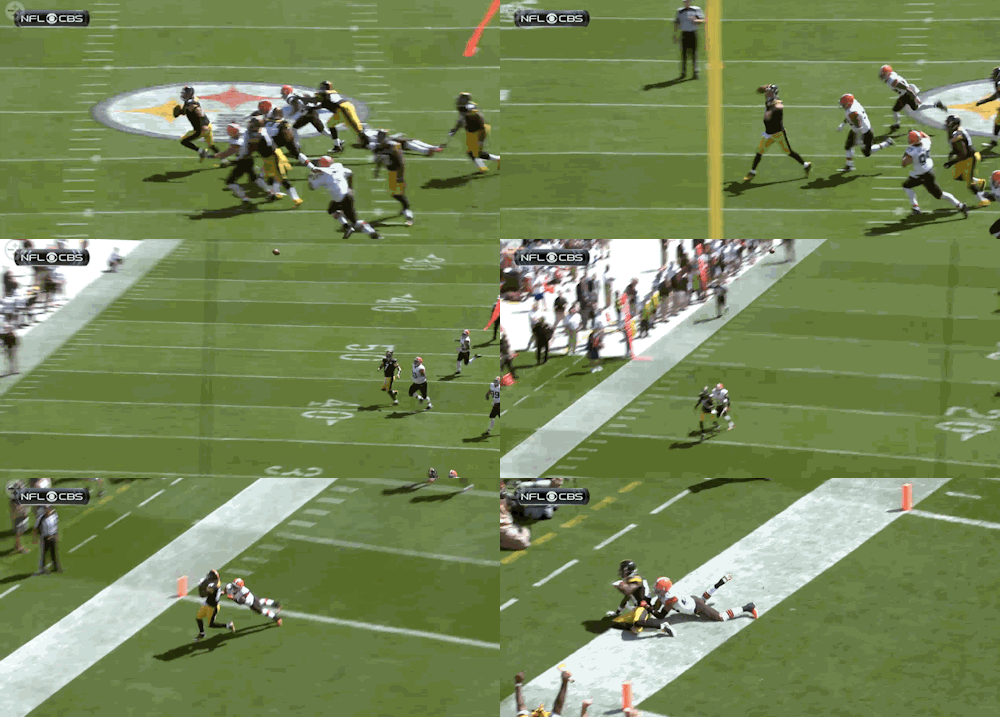
Antonio Brown kicking the Browns punter in the face.
Football isn't always about "feel-good" stories, but seeing Spence start the first preseason game after suffering a devastating (and potentially career-ending) knee injury two years ago was something special. Spence came on throughout the year to be a very solid player.
A Better Start Than Last Year
No one was lost for the season on the first drive, so this is already better than last season
— Amanda (@PghGurl) September 7, 2014
DAT PASS
Antonio Brown kicking the Browns punter in the face.
As an aside: For those that follow me on Twitter, you know that I commonly say "All Antonio Brown does is make big plays." I've tried to teach my 3-year old to say this, but every time I ask him "What does Antonio Brown do?" he says "Kicks people in the face!"
Condoms
Peezy Getting Wrecked
Something happening for the first time since I was in diapers
Antonio Brown's Lynn Swann impression against Tampa
Something happening for the first time since I was in diapers
#Steelers have 2 RBs over 100yds in game (Le’Veon Bell & LeGarrette Blount) - 1st time since 10/26/1986 (Earnest Jackson&WalterAbercrombie)
— Dom Rinelli (@drinelli) September 22, 2014
Antonio Brown's Lynn Swann impression against Tampa
Click for the awesome AB picture.
Stay for the Yinzer reactions in the stands pic.twitter.com/xIPaeb4bbV
— Steve Braband (@stevebraband) September 28, 2014
Taking over the Jaguars pool

The season turning around when Lawrence Timmons blew chunks on national TV
Everything about the Indianapolis Game
...even the Colts fans getting it:
Mean Joe Greene's Jersey Retirement

...and this AWESOME Mean Joe-centric Renegade
Brett Keisel coming back and giving it everything he had

Le'Veon Bell carrying the team on his back after LeGarrette Blount was cut

Big Play Bill Gay's 3 Pick-Sixes

Goodbye .500
Mike Tomlin being emotional on the sidelines
James Harrison's Last Hurrah Against The Chiefs


We were 3-3 and down 10-0 to the Texans when this happened. The defense held the Texans to a field goal then the offense rattled off 24 points in the last 3 minutes of the half, scoring 3 TDs in the final 1:45 of game time.
same pic.twitter.com/uIks3bCtyt
— Mike Tunison (@xmasape) October 26, 2014
im glad the best qb game in nfl history came while wearing the bumblebee throwbacks so everyone has to see them on highlights for eternity.
— psamp (@psamp) October 27, 2014
The #Steelers had 34 first-downs today, 3rd highest in a game in team history & most since Nov 25th 1979 v Cleveland (36)
— Ken Laird (@Ken_Laird) October 27, 2014
The #Steelers 639 yards of total offense was the 3rd highest in team history and most in a game since Nov 10th, 2002 v Atlanta (645)
— Ken Laird (@Ken_Laird) October 27, 2014
...even the Colts fans getting it:
60 RT @EconolineVan: @NateDunlevy they're gonna drop 50 on us, aren't they?
— Nate Dunlevy (@NateDunlevy) October 26, 2014
Mean Joe Greene's Jersey Retirement
...and this AWESOME Mean Joe-centric Renegade
Brett Keisel coming back and giving it everything he had
Le'Veon Bell carrying the team on his back after LeGarrette Blount was cut
Christ once tried to trade Peter for Le'Veon Bell.
— psamp (@psamp) December 14, 2014
Big Play Bill Gay's 3 Pick-Sixes
Goodbye .500
9 wins. no more .500 ball. now make the playoffs.
— psamp (@psamp) December 14, 2014
Mike Tomlin being emotional on the sidelines
@thesteelersnat pic.twitter.com/6MRVpiVSxH
— OneForTheOtherThumb (@OFTOT) December 22, 2014
James Harrison's Last Hurrah Against The Chiefs
The Battle For the North
Winning the Division
The 2014 Steelers were primarily a young team that did not have much postseason experience. By my count, there were 27 players who had never played in a playoff game that took the field against Baltimore. It was a bit of baptism by fire, but postseason experience (however brief) is something that can only benefit this team moving forward. The team did get significant contributions from veterans as well, with Brett Keisel being called upon in the 11th hour of the preseason to come back and fill a hole in the defensive line. Keisel proved to be more than a stopgap - he was the 3rd best player on the defense for most of the season until he was lost to a torn biceps. The team lost Ike Taylor, Jarvis Jones and first round pick Ryan Shazier to injury in Week 3 against Carolina, prompting them to bring back James Harrison from retirement. Even though he was not the same player that he was in his prime, Harrison stabilized the run defense and provided an epic moment against Cincinnati.
Play before the Gresham TD, Moats ran in from sideline, went up to Harrison to sub, James pointed back to sideline, Moats turned & ran back.
— The Steelers n'at (@thesteelersnat) January 2, 2015
As the season went on, the Steelers were able to work their young players into the lineup. Stephon Tuitt went from only getting a handful of snaps in the season opener to being the starting defensive end opposite Cam Heyward. Sean Spence, Vince Williams and Ryan Shazier proved to be a viable tandem of linebackers that could be situationally rotated next to Lawrence Timmons. Le'Veon Bell emerged as one of the best - if not the best - all-around back in the league, rushing for over 1300 yards and finishing with over 800 receiving yards (one of just 7 players all time to have 1000+ rushing yards and 800+ receiving yards). Antonio Brown had a season that didn't even seem possible for a Steelers receiver, posting the second most receptions and 6th most years in a single season in league history. Not only was it the best season ever by a Steelers receiver, it was one of the best ever in league history. Ben Roethlisberger tied Drew Brees for the passing title. The Steelers had 3 All-Pro players (Bell, Brown and Maurkice Pouncey) and had 5 Pro Bowl selections (Bell, Brown, Pouncey, Roethlisberger and Timmons). Arguably, David DeCastro and Cam Heyward could have been Pro Bowlers as well.
Such is life in the NFL. Like with the Game of Thrones, when you play you either win or you die. The Steelers will not sit upon the Iron Throne / raise the Lombardi Trophy this year. But that does not mean this season was unsuccessful. This should be remembered as one of the greatest offensive teams the Steelers ever fielded. Antonio Brown, Ben Roethlisberger and Le'Veon Bell had some of the best seasons in Steelers history. Ultimately, as is true in all sports - the problems you have in the regular season will haunt you in the postseason. The Steelers could not defend against the Ravens tight ends, they could not generate a consistent pass rush, they rang up a bunch of yards but kicked field goals instead of scoring touchdowns, and their safety play was non-existent. There is hope for the future. There is potential in the young defensive players added in this draft and the offensive stars (outside of Ben who has only 1 year left on his contract) are all signed for the long-term. The Steelers window is not closing. There will be plenty of time during the offseason to analyze the team needs and what they will need to add in free agency and the draft.
But now, it is time to close the book on 2014. In closing, thanks to everyone who tweeted, re-tweeted, read the blog, commented, and chatted with me this year. I never dreamed this blog would grow as big as it has, and I hope you all have enjoyed reading as much as I have enjoyed writing. The 2014 season was a fun ride, even though it ended with disappointment at the hands of our rivals. It should not be forgotten because of what this team achieved. Hopefully in the future we can remember 2014 as a stepping stone towards our Seventh Ring. Unfortunately, 2014 will not be the season that we reached the pinnacle of the Stairway to Seven.
Wednesday, January 7, 2015
Valar Morghulis: Steelers Lose
 30
30 17
17The atmosphere for the first playoff game at Heinz Field since 2010 was absolutely electric. The people sitting behind me asked what I thought about the game and the first thing I said was "we need to score 30 to win."

Offense got the nod for the intros. The Steelers won the toss and took the ball.
In a bit of a surprise, Ben Tate started the game in the backfield as the Steelers tried to work him in. He looked good on his first few touches but coughed the ball up, which we were lucky that AB was able to recover. AB ws able to pick up a 3rd down and get us to the fringe of field goal range but a sack set things back and that was that.

Brad Wing actually pinned the Ravens deep and the defense was able to hold to a 3-and-out, which was the only time we stopped them all game.
Martavis Bryant showed up big time in this game and started to look like a complete receiver, showing off much more of the route tree than we had previously seen. Bryant made an exquisite catch on a back-shoulder throw to convert a 3rd down on a stop-route down the sideline to get us to the edge of the red zone. The offense couldn't do much else as Dri got swallowed by Suggs and Ben got sacked by Dumervil.

3-0
Flacco took a deep shot and McCain made a great play to knock the ball away. A flag came out from the back judge and the crowd was irate thinking it would be pass interference.

FYI, fans at the game thought DPI was going to be called, then realized Mitchell is an idiot.
— Chris (@ChrisG_BR) January 4, 2015
Commercial Break
Wooooooo my name made the @heinzfield birthday list!
— The Steelers n'at (@thesteelersnat) January 4, 2015
Folks in my section sang "Happy Birthday" to me too, so that was fun. Also, happy birthday to this guy:

Second Quarter
In a drive that would give Gary Kubiak wet dreams, Forsett got chunks on the ground in the outside zone and Flacco hit Owen Daniels a few times to march inside the 5. Bernard Pierce cashed it in.

3-7

Ben came right back with a beautiful deep out to AB that pretty much no one can stop. A few plays later, he was able to scramble away from pressure and find Heath wide open down the right side to get us into Ravens territory. We worked our way into field goal range and Ben took a shot for AB in the end zone on 3rd and 1 but he got pushed out and couldn't get both feet down.

6-7
Flacco came out and went right after the secondary, hitting Steve Smith down the sideline for 23 to get them near midfield then converting a 3rd and long with a pass to Daniels to get them into field goal range. Not much else happened and Tucker knocked one through.
6-10
The Steelers were able to pick up two solid chunks to get near midfield as the two minute warning hit. The Steelers had already spent a timeout and wasted another one after getting across midfield. Wheaton took advantage of the Ravens playing 2-deep and reeled in a crossing route and got out of bounds to get us into field goal range. The offense couldn't do much more and Ben took a check-down to Heath on 3rd and long. Suisham hit a 47-yarder to draw us within 1 at the half.
9-10
Third Quarter
The Ravens got the ball to start the second half and picked up right where they left off. Flacco hit Torrey Smith on a come-back route to convert a 3rd and long then hit the jackpot on pass interference roulette to get into field goal range.

9-13
At this point, the difference in the game was that the Steelers had kicked a field goal on their trip to the red zone and the Ravens had scored a touchdown.

The Steelers tried their hand at Pass Interference Roulette but the refs decided not to throw a flag after Bryant got knocked down.

Don't know how they call pass interference on Antwon Blake and not on Lardarius Webb.
— Scott Brown (@ScottBrown_ESPN) January 4, 2015
"Refs you suck" chant at Heinz
— The Steelers n'at (@thesteelersnat) January 4, 2015

Flacco continued to play pass interference roulette but actually connected on a pass to Steve Smith down the sideline, immediately putting the Ravens back in field goal range. the defense looked capable of holding the Ravens to 3 and on 3rd down James Harrison stormed around the edge and was microns away from swatting the ball out of Flacco's hand when Joe stepped up in the pocket away from Harrison, slid to his left and fired a touchdown pass to Torrey Smith in the back of the end zone.


Just like your show did, in the end.
9-20
Can't blame the refs for the defense playing like garbage
— Amanda (@PghGurl) January 4, 2015
That put a damper on the crowd and the offense sputtered out another drive that included a 4th down conversion with Will Johnson pounding the rock but a sack on the subsequent 3rd down put an end to things.
Fourth Quarter
The Ravens drove it right back to midfield, converting a 4th and 1 with a QB sneak that everyone on earth knew was coming. However, on the next play two rookies stepped up with Ryan Shazier reaching a hand in and separating Forsett from the ball. Tuitt fell on it and the Steelers had new life at midfield.
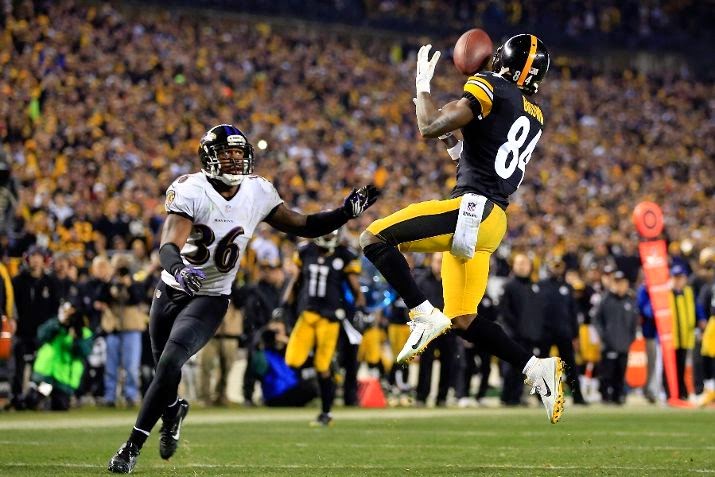
Haley wasted no time and went right for it. Ben slung one deep to AB who was able to get between 3 Ravens defenders and make a leaping catch for what looked like a touchdown.

After review, they ruled his knee was down at the 1. Nevertheless, what a catch by AB.
After a false start that could've spelled trouble, Ben hit Bryant on a well-thrown fade.


The Steelers opted to go for 2 to try to cut it to a 3-point game but Ben put a little too much air under a pass to AB and it was picked off.

15-20
The Steelers still had hope but the Ravens got a personal foul penalty tacked on to a good kick return. The defense held to 3rd and 13 but Flacco was able to hit Daniels wide open across the middle to move the sticks. The Ravens weren't able to convert again, but Tucker nailed a 52 yarder. That's unheard of at Heinz Field.

15-23
The Steelers weren't out of it yet but a series of unfortunate events would bury them.
On 3rd and short, Ben tried a check-down pass to Ben Tate that bounced off Tate's hands. Suggs made a rolling attempt at catching the ball and it was called an interception on the field, which everyone thought was wrong. As it turns out, Suggs trapped the ball between his thighs and it never touched the ground.

Mike Wallace made a similar catch for a touchdown a few years ago against Kansas City, so there's that.

Flacco hit some tight end on a crossing route that the Steelers had been unable to stop all day and the defense just laid down and let him walk into the end zone

15-30
ding ding here comes the shitmobile.
— psamp (@psamp) January 4, 2015
Suggs making a big interception then Flacco throwing a big touchdown pass to a wide open tight end is basically the equivalent of Ned Stark getting beheadded.
There was still 8 minutes left in the game, but people started streaming out of their seats.
The offense was able to put together a drive into Ravens territory with Ben spreading the ball aroud to AB, Wheaton and Dri. Archer actually caught one out of the backfield and scampered into the end zone but the play was called back on a holding penalty.

On the next play, Ben got sacked and thrown to the ground and left the game. Bruce Gradkowski played his first snaps as a Steeler and completed two - one to Heath on 3rd and long then another to AB on 4th and 3 to move the chains. Ben came back in and tried to force one to AB which got picked off.
The Ravens were content to run the ball and punt but Shamarknado had other ideas, flying in and blocking the punt for a safety.

17-30
It was all over except for the details with under 2 minutes left and to add insult to injury Heath Miller fumbled after picking up a first down.

Flacco kneels it out.

Game Over.
Beyond funny
“@Johnnyb500: @FrankCaliendo #NuffSaid... pic.twitter.com/ta7tpiMckN”
— Frank Caliendo (@FrankCaliendo) January 4, 2015
Playoffs over.
Ben "I apologize to the fans, to my teammates, to the organization, coaches. I wish I could apologize individually to everyone."
— Jeff Hathhorn (@jhathhorn) January 4, 2015
Season Over.
Remember wk 7 when we were 3-3 -few thought we could win Division & get back to playoffs. Disappoint night, but THX @steelers for fun season
— bill peduto (@billpeduto) January 4, 2015
Final Thoughts
These aren't really my final final thoughts for the season, I'll have more coming in a season wrap-up post, but here are my final thoughts on this game.
- I guess 30 points was the magic number
- Ravens showed no respect at all for the Steelers run game, played 2 safeties high the whole game, let their front 7 handle the run. The 2 safeties high effectively took away the deep ball, so before you think "we should've thrown deep more"...it wasn't there.
- Biggest play of the game was Flacco stepping away from Harrison and throwing a TD to Torrey Smith.
- Credit where credit is due, the Ravens had a good gameplan and executed it well. Converted a lot of 3rd and longs.
- The Steelers played behind the chains most of the night and weren't great on 3rd down. Flacco converted some big ones.
- Suggs and Dumervil dominated our tackles and we couldn't generate much of a pass rush on Flacco.
- One truism of all sports is that the problems you have in the regular season will always come back to haunt you in the postseason. Our safeties were non-existent, we couldn't cover tight ends, we committed lots of penalties and we couldn't convert in the red zone.
- The run defense was very good after the Ravens first touchdown drive.
- The run defense was actually at its best when Dan McCullers was in at nose tackle, which is very encouraging moving forward.
- Martavis Bryant showed signs of developing into a complete receiver. This was the best he attacked the ball in the air with his hands all year.
- Josh Harris ran hard and didn't fumble, so there's that.
- Wheaton did some good things out of the slot on crossing routes.
- Stephon Tuitt really came on the second half of the season. He does a great job running to the ball. Huge fumble recovery after Shazier knocked it out.
I love u #STEELERNATION...couldn't be more proud of the way the team worked and fought to get to the playoffs...just wish I could've joined!
— Le'Veon Bell (@L_Bell26) January 4, 2015
Subscribe to:
Posts (Atom)